• Home
  • Latest
  • Fortune 500
  • Finance
  • Tech
  • Leadership
  • Lifestyle
  • Rankings
  • Multimedia
TechAutos

Trump’s chip tariff threat sparks pushback from auto industry to tech

By
Michael Shepard
Michael Shepard
and
Bloomberg
Bloomberg
Down Arrow Button Icon
By
Michael Shepard
Michael Shepard
and
Bloomberg
Bloomberg
Down Arrow Button Icon
June 24, 2025, 1:40 PM ET
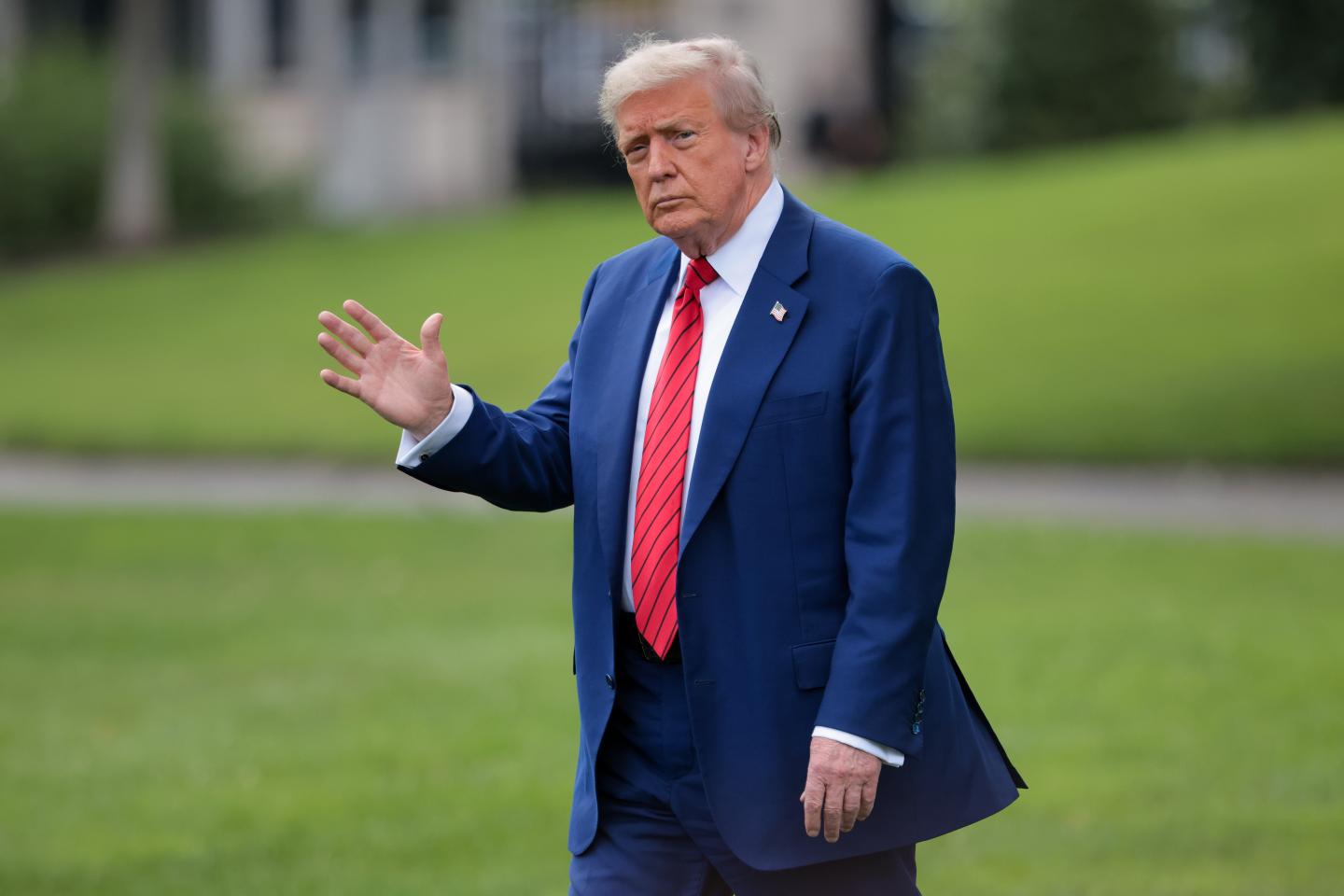
The possible levy of up to 25% has united rivals like Tesla, General Motors, and Ford in voicing reservations.
The possible levy of up to 25% has united rivals like Tesla, General Motors, and Ford in voicing reservations.Kayla Bartkowski/Getty Images

Blowback to President Donald Trump’s idea of tariffs on imported semiconductors is proving to be broad and deep, stretching from auto companies and boat makers to the technology industry and crypto enthusiasts, according to a review of more than 150 public comments on the proposal.

Recommended Video

The possible levy of up to 25% has united rivals like Tesla Inc., General Motors Co. and Ford Motor Co. in voicing reservations. It’s brought together industry lobbies from the Crypto Council for Innovation to the National Marine Manufacturers Association. Even Taiwan and the People’s Republic of China are finding common cause, along with predictable parts of the tech sector including chipmakers and wireless providers. 

The reason is that chips are now in almost everything: refrigerators and microwaves, tire pressure sensors and navigation systems, electronic bidets and sonar equipment and, of course, smartphones and computers. Tariffs threaten to snarl supply lines and jack up costs for consumers.

“There’s a large mismatch between the amount of chips we use in this country in various products and the supply created here in the US,” JoAnne Feeney, a partner and portfolio manager at Advisors Capital Management, said in an interview. “Putting a tax on those imports will simply raise the cost, and that’s not a good thing for consumers.”

Case in point is the marine association, which warns the impact would be felt by more than 1,300 manufacturers who face higher expenses for essentials like propulsion technology, engines and GPS systems. 

“These systems are not optional luxuries — they are fundamental to safety, function and performance,” the association said. “Many components have no U.S. equivalent or are only available from highly concentrated suppliers overseas.”

The boating sector’s concerns were among comments from 154 stakeholders submitted to a Commerce Department review of whether to slap tariffs on chips as part of Trump’s campaign to redraw global supply lines and boost domestic manufacturing. Predictable tech sources weighed in, including chipmakers Taiwan Semiconductor Manufacturing Co. and Intel Corp. But feedback also landed from a wide spectrum of sectors, along with trading partners like Japan and Brazil.

The companies, trade groups and individuals who commented on the chips investigation largely signaled support for the president’s vision of deepening the U.S. manufacturing base and expanding the American workforce. Yet most expressed concern over the potential consequences and urged making any levies that emerge as targeted as possible.

Taken together, the filings point to unease across a range of industries about the economic fallout from targeting chips. Trump has so far brushed off many of those concerns and cited plans by a range of companies to invest in the U.S., including Taiwan-based TSMC’s decision to boost its commitment to building plants near Phoenix.

White House spokesman Kush Desai said Trump remains committed to reshoring manufacturing critical to U.S. national security. “While the Commerce Department completes its Section 232 investigation, the administration is expanding domestic critical mineral production, slashing regulations, and pushing pro-growth policies,” Desai said in a statement. The Commerce Department didn’t respond to a request for comment.

In its submission, TSMC highlighted plans for six advanced semiconductor fabs and two packaging facilities along with a research center as part of a $165 billion investment in Arizona that’s expected to create thousands of jobs. Yet the company warned import levies would make it harder to deliver those projects on schedule, while slowing U.S. efforts to expand domestic production of chips for 5G wireless, artificial intelligence and autonomous driving.

“Additional tariffs or other restrictive measures on semiconductors could reduce the profitability of leading U.S. companies by limiting sourcing options, driving up production costs, and reducing product demand,” TSMC’s Arizona subsidiary wrote. 

In its filing, Tesla urged coordination between government and industry to minimize uncertainty that could upset supply chains, citing its ties to Asia, Europe and Africa. “These partnerships allow us to focus on increasing U.S. dominance in advanced manufacturing,” the company wrote. “Impacts to these inputs for which there is insufficient domestic availability will put a strain on resources during a key moment in the global artificial intelligence race.”

Chipmaker Intel cautioned that trading partners could respond with protective measures that exclude American products. Intel is seeking to reverse years of struggle by spending more than $100 billion to expand its domestic manufacturing, and the company called on the administration to spare US-made wafers as well as any chips made abroad using American technology.

A common concern aired by TSMC, Intel and others in the semiconductor industry centered on the risk that chipmaking equipment produced by foreign suppliers like ASML Holding NV would get hit with import taxes. A single extreme ultraviolet lithography machine from Netherlands-based ASML, the world’s sole provider of the most advanced chipmaking gear, can cost nearly $400 million. Adding tariffs would significantly boost the cost of equipping new U.S. facilities.

ASML submitted feedback to the Commerce Department — but its filing was marked “business confidential” and unavailable for public review. In its comments, Intel urged exempting such machines, noting that “the primary cost driver for semiconductor fabs, accounting for two-thirds of total construction expenses, is equipment and machinery.”

Replacing semiconductors produced abroad with domestic output would be very difficult, Feeney said. 

“It takes years to create the industrial infrastructure to make creating a semiconductor fabrication facility even possible,” she said. “At a time we’re trying to build up an AI infrastructure of data centers, the last thing you want to do is put a substantial tariff on the most important input into those data centers.”

Major U.S. trading partners, already stung by Trump’s so-called reciprocal tariffs, objected to the idea of targeting chips, after seeing the auto sector along with steel and aluminum imports hit with levies. Taiwan, which produces nearly 90% of the world’s most advanced semiconductors, highlighted the complementary role of TSMC foundries that churn out wafers for leading American chip designers Nvidia Corp. and Advanced Micro Devices Inc.

Tariffs on semiconductors or related products from the island “would severely impair Taiwan’s ability to meet the demands of the U.S. semiconductor industry in a timely manner,” the Taiwanese government said in its filing. “This would drive up costs for U.S. companies, raise end-product prices, reduce profitability and revenue, and ultimately weaken the capacity of U.S. firms to invest in R&D and innovation.”

Join us at the Fortune Workplace Innovation Summit May 19–20, 2026, in Atlanta. The next era of workplace innovation is here—and the old playbook is being rewritten. At this exclusive, high-energy event, the world’s most innovative leaders will convene to explore how AI, humanity, and strategy converge to redefine, again, the future of work. Register now.
About the Authors
By Michael Shepard
See full bioRight Arrow Button Icon
By Bloomberg
See full bioRight Arrow Button Icon

Latest in Tech

Finance
Lorem ipsum dolor sit amet, consectetur adipiscing elit, sed do eiusmod tempor incididunt ut labore et dolore magna aliqua. Ut enim ad minim veniam
By Fortune Editors
October 20, 2025
Finance
Lorem ipsum dolor sit amet, consectetur adipiscing elit, sed do eiusmod tempor incididunt ut labore et dolore magna aliqua. Ut enim ad minim veniam
By Fortune Editors
October 20, 2025
Finance
Lorem ipsum dolor sit amet, consectetur adipiscing elit, sed do eiusmod tempor incididunt ut labore et dolore magna aliqua. Ut enim ad minim veniam
By Fortune Editors
October 20, 2025
Finance
Lorem ipsum dolor sit amet, consectetur adipiscing elit, sed do eiusmod tempor incididunt ut labore et dolore magna aliqua. Ut enim ad minim veniam
By Fortune Editors
October 20, 2025
Finance
Lorem ipsum dolor sit amet, consectetur adipiscing elit, sed do eiusmod tempor incididunt ut labore et dolore magna aliqua. Ut enim ad minim veniam
By Fortune Editors
October 20, 2025
Finance
Lorem ipsum dolor sit amet, consectetur adipiscing elit, sed do eiusmod tempor incididunt ut labore et dolore magna aliqua. Ut enim ad minim veniam
By Fortune Editors
October 20, 2025

Most Popular

Finance
Lorem ipsum dolor sit amet, consectetur adipiscing elit, sed do eiusmod tempor incididunt ut labore et dolore magna aliqua. Ut enim ad minim veniam
By Fortune Editors
October 20, 2025
Finance
Lorem ipsum dolor sit amet, consectetur adipiscing elit, sed do eiusmod tempor incididunt ut labore et dolore magna aliqua. Ut enim ad minim veniam
By Fortune Editors
October 20, 2025
Finance
Lorem ipsum dolor sit amet, consectetur adipiscing elit, sed do eiusmod tempor incididunt ut labore et dolore magna aliqua. Ut enim ad minim veniam
By Fortune Editors
October 20, 2025
Finance
Lorem ipsum dolor sit amet, consectetur adipiscing elit, sed do eiusmod tempor incididunt ut labore et dolore magna aliqua. Ut enim ad minim veniam
By Fortune Editors
October 20, 2025
Finance
Lorem ipsum dolor sit amet, consectetur adipiscing elit, sed do eiusmod tempor incididunt ut labore et dolore magna aliqua. Ut enim ad minim veniam
By Fortune Editors
October 20, 2025
Finance
Lorem ipsum dolor sit amet, consectetur adipiscing elit, sed do eiusmod tempor incididunt ut labore et dolore magna aliqua. Ut enim ad minim veniam
By Fortune Editors
October 20, 2025
Fortune Secondary Logo
Rankings
  • 100 Best Companies
  • Fortune 500
  • Global 500
  • Fortune 500 Europe
  • Most Powerful Women
  • World's Most Admired Companies
  • See All Rankings
  • Lists Calendar
Sections
  • Finance
  • Fortune Crypto
  • Features
  • Leadership
  • Health
  • Commentary
  • Success
  • Retail
  • Mpw
  • Tech
  • Lifestyle
  • CEO Initiative
  • Asia
  • Politics
  • Conferences
  • Europe
  • Newsletters
  • Personal Finance
  • Environment
  • Magazine
  • Education
Customer Support
  • Frequently Asked Questions
  • Customer Service Portal
  • Privacy Policy
  • Terms Of Use
  • Single Issues For Purchase
  • International Print
Commercial Services
  • Advertising
  • Fortune Brand Studio
  • Fortune Analytics
  • Fortune Conferences
  • Business Development
  • Group Subscriptions
About Us
  • About Us
  • Press Center
  • Work At Fortune
  • Terms And Conditions
  • Site Map
  • About Us
  • Press Center
  • Work At Fortune
  • Terms And Conditions
  • Site Map
  • Facebook icon
  • Twitter icon
  • LinkedIn icon
  • Instagram icon
  • Pinterest icon

Latest in Tech

AstraZeneca CFO Aradhana Sarin
BankingCFO Daily
How AstraZeneca’s 17,000 AI-certified employees are helping it reach a ‘stretch goal’ of $80 billion in revenue
By Sheryl EstradaApril 30, 2026
2 hours ago
agentic
CommentaryAI agents
Why your data infrastructure — not your AI model — will determine whether Agentic AI scales
By Jeffrey Sonnenfeld, Stephen Henriques, Catherine Dai and Zander JeinthanuttkanontApril 30, 2026
2 hours ago
The startup that wants to give surgeons X-ray vision
NewslettersTerm Sheet
The startup that wants to give surgeons X-ray vision
By Allie GarfinkleApril 30, 2026
2 hours ago
Google Cloud CEO Thomas Kurian at Fortune Brainstorm AI 2025 in San Francisco. (Photo: Stuart Isett/Fortune)
NewslettersFortune Tech
Google Cloud is almost one-fifth of Alphabet’s business
By Andrew NuscaApril 30, 2026
3 hours ago
Photo: Donald Trump
Big TechMarkets
With no end in sight, Trump considers new options in Iran war—including the ‘Dark Eagle’ hypersonic missile
By Jim EdwardsApril 30, 2026
4 hours ago
Google Cloud revenue is now 18% of Alphabet’s business. Is this the beginning of the end of Google’s search identity?
Big TechGoogle
Google Cloud revenue is now 18% of Alphabet’s business. Is this the beginning of the end of Google’s search identity?
By Alexei OreskovicApril 29, 2026
12 hours ago

Most Popular

Apple cofounder Ronald Wayne—whose stake would be worth up to $400 billion had he not sold it in 1976—says that at 91, he has no regrets
Success
Apple cofounder Ronald Wayne—whose stake would be worth up to $400 billion had he not sold it in 1976—says that at 91, he has no regrets
By Preston ForeApril 27, 2026
3 days ago
Jamie Dimon gets candid about national debt: ‘There will be a bond crisis, and then we’ll have to deal with it’
Economy
Jamie Dimon gets candid about national debt: ‘There will be a bond crisis, and then we’ll have to deal with it’
By Eleanor PringleApril 29, 2026
1 day ago
‘They left me no choice’: Powell isn’t going anywhere—blocking Trump from another Fed appointee
Banking
‘They left me no choice’: Powell isn’t going anywhere—blocking Trump from another Fed appointee
By Eva RoytburgApril 29, 2026
19 hours ago
‘The cost of compute is far beyond the costs of the employees’: Nvidia executive says right now AI is more expensive than paying human workers
AI
‘The cost of compute is far beyond the costs of the employees’: Nvidia executive says right now AI is more expensive than paying human workers
By Sasha RogelbergApril 28, 2026
2 days ago
‘Take the money and run’: Johns Hopkins economist Steve Hanke on why the UAE quit OPEC
Energy
‘Take the money and run’: Johns Hopkins economist Steve Hanke on why the UAE quit OPEC
By Shawn TullyApril 29, 2026
1 day ago
More than two-thirds of U.S. schools say they’re unable to afford the cost of student free lunch—and MAHA’s dietary guidelines may make it worse
Economy
More than two-thirds of U.S. schools say they’re unable to afford the cost of student free lunch—and MAHA’s dietary guidelines may make it worse
By Sasha RogelbergApril 29, 2026
1 day ago

© 2026 Fortune Media IP Limited. All Rights Reserved. Use of this site constitutes acceptance of our Terms of Use and Privacy Policy | CA Notice at Collection and Privacy Notice | Do Not Sell/Share My Personal Information
FORTUNE is a trademark of Fortune Media IP Limited, registered in the U.S. and other countries. FORTUNE may receive compensation for some links to products and services on this website. Offers may be subject to change without notice.